In the darkness of February, when tourists retreat and Florence belongs again to itself, the city writes its history twice - once in stone and once in reflections. I felt this duality after stepping from a warm trattoria into the biting cold, my camera like an extension of numbing fingers.
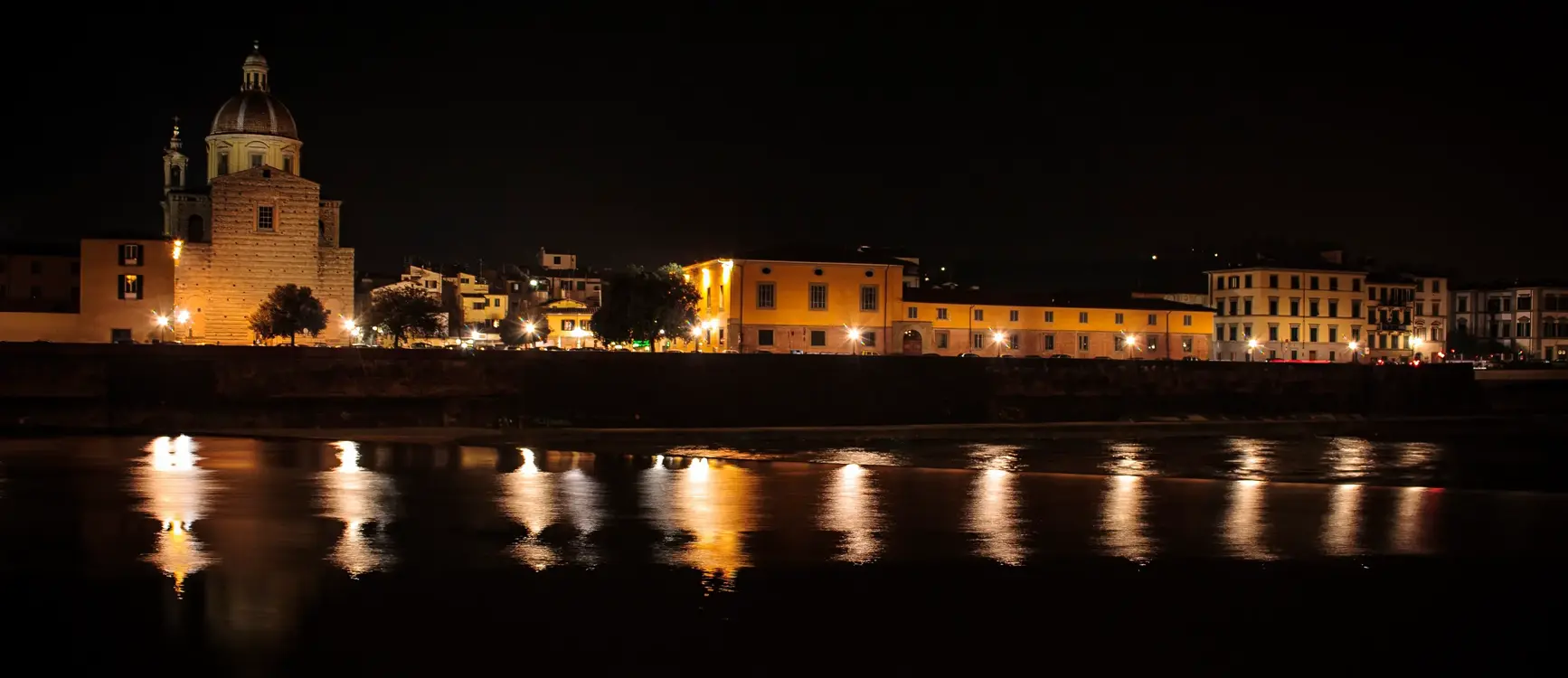
The Arno becomes both mirror and manuscript here. The church of San Frediano in Cestello stands sentinel on the riverbank, its dome collecting the night's sparse illumination while the surrounding palazzi scatter their amber glow across the water's surface.
What drew me out into the winter night was this secret conversation between architecture and water—how centuries-old buildings relinquish their solidity when cast upon the river. The water ripples with their light, transforming rigid geometry into fluid calligraphy.
This isn't just Florence reflected, but Florence reinterpreted. The city's golden lights perform a slow dance on dark water, writing ephemeral signatures that exist only in this moment, between my dinner's end and the deepening night.
View from the south bank of the Arno River in the Oltrarno district of Florence, looking North towards San Frediano in Cestello Church and its illuminated dome. The image captures the Baroque church and surrounding historic buildings with their reflections on the water's surface.