
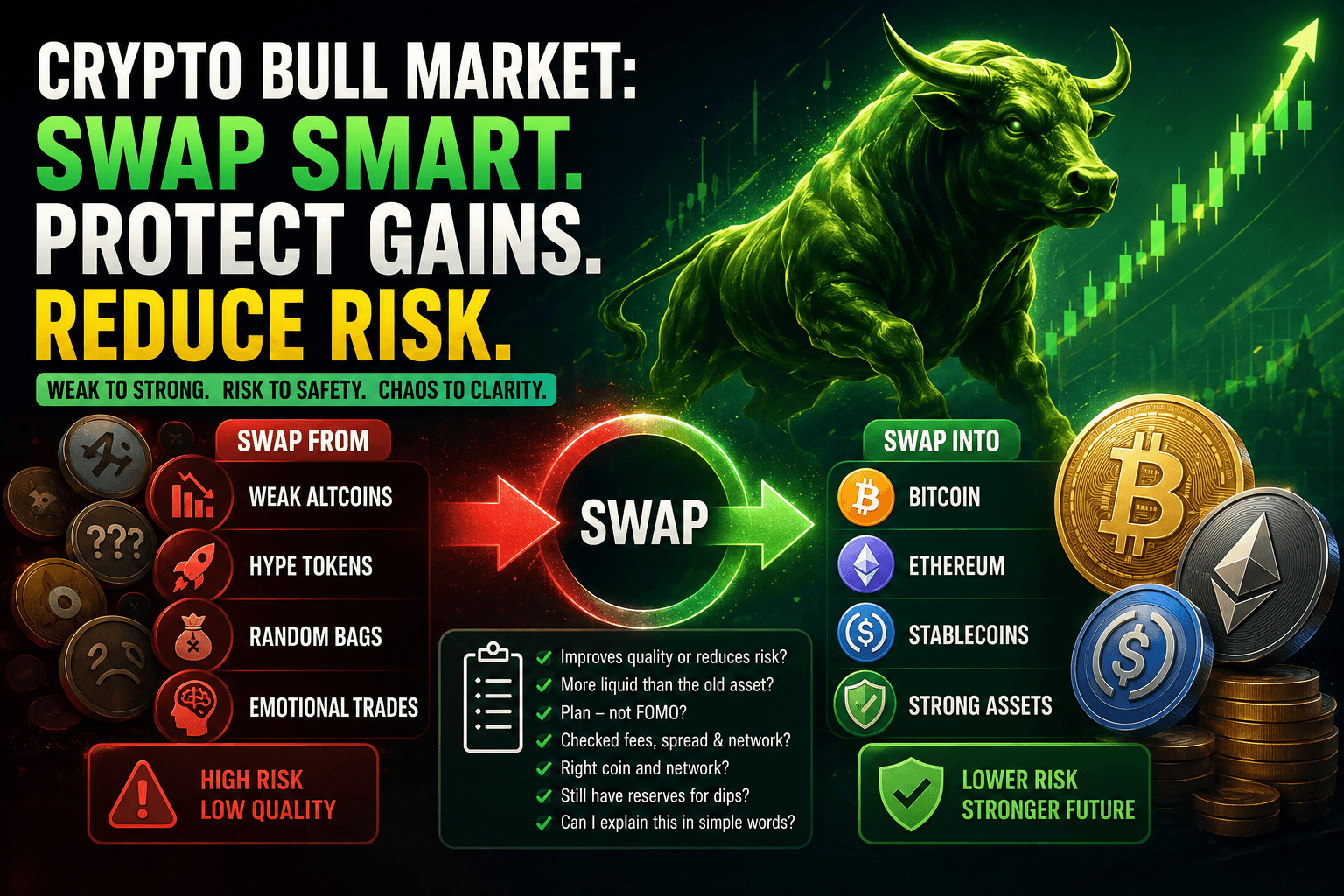
During a crypto bull market, I would swap weak altcoins, oversized risky gains, hype tokens, and random small bags into stronger assets, safer reserves, and a cleaner portfolio. As a crypto enthusiast, I think beginners should focus less on catching every pump and more on keeping gains when the market becomes emotional.
How a Crypto Bull Market Changes Bitcoin, Ethereum, Altcoins, and Investor Behavior
A bull market means prices are rising, confidence is growing, and more people are willing to buy riskier assets. In crypto, Bitcoin often leads attention first, Ethereum and Solana can follow with strong network activity, and smaller altcoins may move later with bigger upside and bigger downside.
For beginners, this market can feel exciting and confusing at the same time. One useful example is when a user decides to swap sol to eth, after SOL has already made a strong move and they want more exposure to Ethereum’s larger ecosystem, DeFi activity, and long-term liquidity. That kind of swap should come from portfolio planning, not panic or social media pressure.
Social media gets louder, new coins trend every week, and people start opening accounts on crypto exchanges such as Coinbase, Binance, Kraken, or OKX. These platforms help users buy, sell, and trade crypto, while instant crypto exchanges such as Changelly are often used for quick crypto-to-crypto swaps. My opinion is simple: a bull market rewards confidence, yet it punishes blind confidence. You need a plan before prices move too fast.
Why Smart Swaps Matter When Your Portfolio Starts Growing Fast
Swaps matter because your portfolio can become riskier without you noticing. A small altcoin can grow into a large part of your holdings after one strong move. That feels great, although it also means one sharp drop can hurt your whole account.
A useful swap should answer one question: does this move make the portfolio stronger? If the answer is yes, the swap may be worth considering. If the reason is only fear of missing out, the trade is probably emotional.
|
Main Entity |
Swap From |
Swap Into |
Purpose |
|
Weak Altcoins |
Low-volume coins |
Bitcoin, Ethereum, or stronger large caps |
Move toward stronger demand |
|
Oversized Gains |
Big altcoin winners |
Stablecoins, cash, BTC, or ETH |
Protect part of the profit |
|
Hype Tokens |
Social media coins |
Assets with liquidity and clearer use |
Reduce hype risk |
|
Random Bags |
Too many small positions |
Fewer clear holdings |
Make the portfolio easier to manage |
|
Emotional Trades |
Panic swaps |
Planned swaps |
Lower mistakes |
Swap Weak Altcoins for Market Leaders
The first swap I look at is weak altcoins into market leaders. A weak coin may still be a real project, yet if it keeps underperforming while Bitcoin, Ethereum, and stronger large-cap coins move, your capital may have a better place to work.
Market leaders usually have stronger liquidity, more buyers, better exchange access, and easier exits. That matters for beginners because getting into a coin is easy. Getting out during a fast drop can be harder.
I would not chase every green chart. I would compare strength. If a coin has low volume, weak attention, and no clear reason to hold, swapping part of it into BTC, ETH, or another stronger asset can make the portfolio healthier.
How to Move Part of Big Altcoin Gains Into Safer Assets
When an altcoin gives a large gain, I like taking partial profit. Waiting for the perfect top sounds attractive, but crypto rarely gives a clear warning before a correction.
Safer assets can mean stablecoins such as USDT or USDC, Bitcoin, Ethereum, or cash. Stablecoins are useful because they keep capital ready for future dips, though users should understand platform, issuer, and network risks. Holding funds on an exchange also adds exchange risk.
For example, a beginner may swap part of a fast-rising altcoin into USDC on Coinbase, USDT on Binance, or BTC on Kraken, depending on regional access. An instant crypto exchange can also be useful for quick coin-to-coin swaps, especially when the user wants a simple interface instead of a trading screen.
My approach: keep some upside, protect some profit, and never let one risky coin control the whole portfolio.
Why Hype Tokens Should Be Swapped Into Higher-Quality Crypto Assets
Hype tokens can rise fast in a bull market. Meme coins, AI tokens, gaming coins, and new narratives can bring big moves because attention moves quickly in crypto. The problem is that hype can leave just as fast.
Quality means stronger liquidity, real users, active development, useful token demand, trusted infrastructure, or a clear role inside an ecosystem. A coin does not need to be boring to be higher quality. It needs a reason to exist beyond social media excitement.
I do not think beginners must avoid every meme coin or trending token. Crypto culture is part of the market. Still, hype positions should usually stay smaller than core positions. If a hype token grows too large, swapping part of it into Bitcoin, Ethereum, stablecoins, or a stronger large-cap asset can reduce risk.
Swap Random Bags for a Cleaner Portfolio
A messy portfolio is one of the biggest beginner problems in a bull market. People buy one coin from a video, another from a friend, another from a trending list, and soon they hold twenty assets with no clear plan.
A cleaner portfolio gives every asset a role. Bitcoin can act as the core market asset. Ethereum or another large network can sit in the growth area. Selected altcoins can add upside. Small speculative coins can stay limited. Stablecoins or cash can wait for dips.
I prefer fewer holdings that I can understand and manage. Seven clear positions are often better than thirty random bags because the owner can actually follow what is happening.
Use Exchanges and a Simple Checklist
Before using a crypto exchange or instant crypto exchange, check fees, spreads, supported networks, minimum amounts, withdrawal options, and wallet addresses. This is important because sending crypto on the wrong network can lead to lost funds.
Use this simple checklist before any bull market swap:
- Does this swap improve quality, reduce risk, or protect profit?
- Is the new asset more liquid than the old one?
- Am I swapping because of a plan or because of social media pressure?
- Have I checked exchange fees, spread, network fee, and tax impact?
- Does the platform support the correct coin and network?
- Do I still have cash or stablecoins for future dips?
- Can I explain the swap in plain language?
My final take: during a bull market, swap weakness into strength, swap part of big gains into safer reserves, swap hype into quality, and swap confusion into structure. Beginners do not need perfect timing. They need clear decisions that help them stay calm when the market gets loud.