

The Rise (and Risk) of No-KYC Exchanges
In a world where on most major exchanges you must upload ID, selfie, proof of address, and more, a handful of platforms still allow you to trade crypto with no or minimal KYC. This article reviews the 10 best no-KYC crypto exchanges as of November 2025, comparing their features, trade-offs, limits, liquidity, and regulatory risks. We aim to guide you (safely) through the evolving landscape and help you decide whether skipping KYC is worth it.
Note: always check local laws before using such platforms. This list is informational, not legal advice.
.jpg)
Criteria & Caveats
Before diving into the list, here are the criteria used:
- “No KYC” or minimal verification: either no identity documents required up to meaningful limits, or only required beyond certain thresholds.
- Operational in 2025: still accessible (not shut down or fully forced into KYC).
- Reasonable liquidity, supported assets, and security practices.
- Global accessibility (or at least broad regional reach).
Caveats:
- Policies change fast. Some exchanges may later enforce stricter KYC.
- Withdrawal limits for unverified accounts are typically low.
- Some platforms are decentralized (DEX) and inherently no-KYC, but with smart contract risks.
- Using no-KYC platforms does not exempt you from tax or regulatory obligations in your country of residence.
Introduction: Why No-KYC Exchanges Still Matter
In 2025, the majority of centralized exchanges will have tightened their KYC rules to meet international compliance standards. Uploading passports, selfies, and utility bills has become the norm on big platforms like Binance or Kraken. Yet, there’s still demand for no KYC crypto exchanges — especially for traders who prioritize privacy, want quicker onboarding, or need alternatives in regions with limited access to global markets.
No-KYC platforms range from centralized services with low verification thresholds to fully decentralized exchanges (DEXs), where your wallet serves as your identity. This list covers the 10 best options available in November 2025, including their strengths, weaknesses, and the type of trader they best suit.
Best No KYC Crypto Exchanges (November 2025)
-
Coin Exchange Canada
The first on our list is coinexchangecanada.ca, a platform designed for Canadian and international traders seeking simple, straightforward access to cryptocurrency without burdensome verification requirements. Registration takes just minutes and requires only an email address. Even in the middle of a sentence, experienced users often say that coinexchangecanada.ca feels like a much smoother entry point compared to large, compliance-heavy platforms.
The exchange supports a wide range of cryptocurrencies, offers transparent fees, and provides solid liquidity for popular pairs such as BTC/USDT or ETH/USDC. While fiat deposits may require extra checks, crypto-to-crypto trading and withdrawals remain accessible to non-verified users.
Strengths: easy sign-up, regional focus, suitable for crypto-only traders.
Weaknesses: fiat gateways may trigger KYC, and have limited exposure compared to global giants.
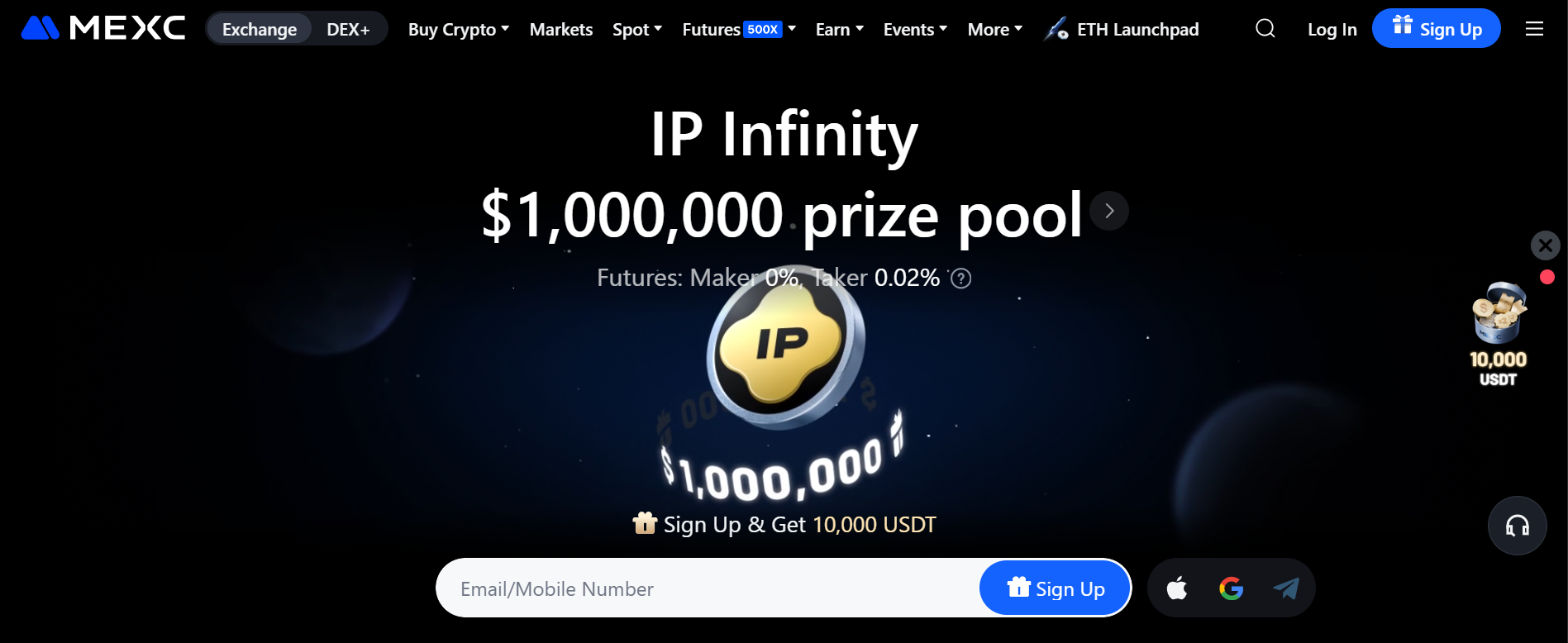
MEXC has become one of the largest no KYC-friendly centralized exchanges worldwide. Known for its enormous selection of coins — over 2,000 listed — and a user-friendly platform, it appeals to both beginners and advanced traders. Unverified users can trade and withdraw crypto within generous daily limits (around 10 BTC equivalent), making it stand out in this category.
MEXC also offers futures, staking, launchpad access, and copy trading, giving it an edge over simpler platforms. However, MEXC does comply with regional restrictions, so users in certain countries may find access blocked.
Strengths: massive coin listings, deep liquidity, and a derivatives market.
Weaknesses: restrictions based on jurisdiction, policy may tighten in the future.
-
Bybit
Bybit is renowned for its derivatives trading, particularly in perpetual contracts. While KYC is increasingly required for fiat transactions, unverified users can still trade, deposit, and withdraw up to specific caps without submitting documents. The platform has grown into one of the most liquid exchanges for Bitcoin and Ethereum derivatives, attracting professional traders worldwide.
Bybit also features a clean interface, a robust mobile app, and regular promotions. The tradeoff is that heavy users will quickly reach withdrawal ceilings and may be prompted to verify their accounts.
Strengths: derivatives powerhouse, strong liquidity, intuitive tools.
Weaknesses: Thresholds for non-KYC users, limited fiat options without ID verification.
-
PrimeXBT
PrimeXBT differentiates itself by offering more than crypto. In addition to Bitcoin and altcoins, traders can access indices, forex, and commodities — all from one platform. For crypto enthusiasts seeking exposure to global markets without lengthy onboarding, this is an attractive option.
No-KYC accounts can trade and withdraw crypto, though daily limits apply. Its copy trading features and leverage options are popular, but as with any CFD-style platform, risks are higher.
Strengths: multi-asset platform, suitable for advanced strategies.
Weaknesses: complex for beginners, higher risk with leverage.
-
Uniswap
As the leading decentralized exchange (DEX) on Ethereum, Uniswap requires no sign-up, no email, and no ID. You simply connect your crypto wallet and swap tokens directly. This is the purest form of no-KYC trading.
Uniswap’s liquidity pools cover thousands of ERC-20 tokens, and it has expanded into Layer-2 networks like Arbitrum and Optimism, reducing gas costs. However, using Uniswap requires familiarity with wallets, transaction fees, and slippage control.
Strengths: fully decentralized, no withdrawal limits, vast token ecosystem.
Weaknesses: Ethereum's gas fees can be expensive, and scams or low-liquidity tokens are prevalent.
-
PancakeSwap
Built on the BNB Chain, PancakeSwap offers cheaper and faster trades than Uniswap while maintaining its no-KYC ethos. Users connect their wallets, such as MetaMask or Trust Wallet, and can instantly swap BEP-20 tokens.
PancakeSwap has built a strong community, featuring yield farming, staking, and an NFT marketplace. It’s a natural choice for those exploring altcoins outside Ethereum’s ecosystem.
Strengths: low fees, fast transactions, diverse DeFi features.
Weaknesses: confined to BNB Chain, subject to smart contract risks.
-
dYdX
dYdX began as a hybrid exchange but has since transitioned toward complete decentralization. It focuses on perpetual futures and has become a top choice for traders who want the speed of a centralized exchange with the privacy of a DEX.
Most users can trade without submitting documents, though country restrictions apply. Liquidity is strong, especially for Bitcoin and Ethereum contracts, making it a solid option for derivatives-focused traders.
Strengths: high-liquidity perpetuals, no custodial risk.
Weaknesses: not available everywhere, more complex than spot-only exchanges.
-
Changelly and SimpleSwap
Both Changelly and SimpleSwap operate as instant, non-custodial swap services. You don’t create an account; instead, you send one crypto and receive another directly to your wallet. For users who value simplicity and don’t need order books, these services are ideal.
Fees are higher than traditional exchanges, and you won’t find advanced tools. But for quick swaps, they remain among the most convenient no-KYC solutions.
Strengths: easy to use, no account needed, fast swaps.
Weaknesses: higher fees and limited features compared to full exchanges.
-
Hodl Hodl
Hodl Hodl is a peer-to-peer Bitcoin exchange using multisig escrow. It allows users to buy and sell BTC directly with others worldwide, without verification. Payments can be made in various methods agreed upon by counterparties.
Because it’s P2P, liquidity depends on the number of active users, and trades can take longer to complete. Still, for those who value privacy and direct interaction, Hodl Hodl remains a trusted name.
Strengths: no centralized custody, escrow protection, global reach.
Weaknesses: lower liquidity and slower transaction speeds compared to instant exchanges.
Emerging Platforms (KCEX, Margex, Bitunix)
Several newer exchanges are emerging in 2025 with no-KYC policies. KCEX and Bitunix offer both spot and futures trading with minimal registration. Margex has built a reputation for being privacy-friendly while offering competitive leverage options.
These platforms are still developing their reputations and liquidity, so they are best suited for smaller trades until they establish more trust.
Strengths: early adoption benefits, a focus on privacy, and modern interfaces.
Weaknesses: limited liquidity, regulatory uncertainty.
Risks and Best Practices
While no-KYC exchanges offer privacy and convenience, they come with risks:
- Withdrawal limits can be strict for non-verified accounts.
- Regulatory crackdowns may force sudden KYC requirements.
- DEXs involve smart contract risks and wallet management responsibility.
- P2P trading requires trust and patience.
Best practices include starting with small amounts, diversifying platforms, using secure wallets, and staying updated on changing policies.
FAQs
Is it legal to use no-KYC exchanges?
In most countries, yes. But you’re still responsible for taxes and compliance.
Which exchange is best for beginners?
Coin Exchange Canada and MEXC are the easiest options for new users, thanks to their simple sign-up processes and clear interfaces.
Can I deposit fiat without KYC?
Rarely. Most no-KYC exchanges limit fiat access. Crypto-to-crypto trading is usually fine.
Are DEXs completely safe?
They’re safer from censorship, but smart contract bugs or scams can occur. Always double-check tokens before swapping.
What if an exchange suddenly requires KYC?
Withdraw your funds promptly. Many platforms set deadlines before enforcing rules.
Conclusion
As of November 2025, traders still have numerous no-KYC options — from region-focused platforms like Coin Exchange Canada to global CEXs like MEXC and Bybit, as well as decentralized giants like Uniswap and PancakeSwap. Each has unique strengths, whether you want anonymity, liquidity, or advanced tools.
The key is to weigh privacy against safety and convenience. If you value control and flexibility, no-KYC exchanges remain an essential part of the crypto ecosystem, but they require extra caution and responsibility.