
There are several routes into crypto, and dealing directly with another trader is one that continues to attract newcomers. In peer-to-peer (P2P) trading, the two of you agree the terms of the exchange. With p2p bitcoin, for example, you can choose an offer around the price, payment method and timing that suit you.
Of course, you still need to know how the arrangement works before you put money into it. Direct contact with another trader doesn't make scams disappear, so learning what to avoid is part of learning how to use P2P. Once you understand the process, you can decide whether this way of buying and selling suits you.
Table of Contents
From an offer to a completed trade
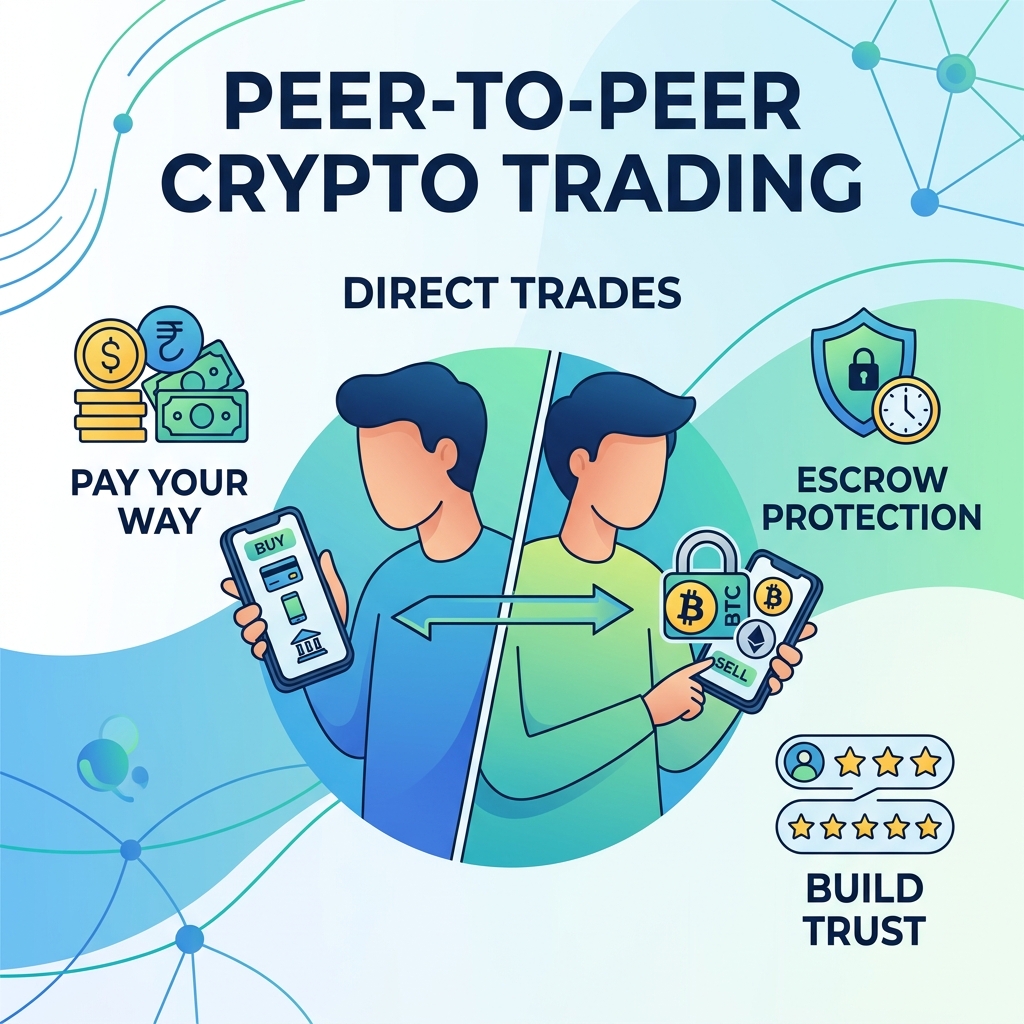
With an order-book exchange, your buy or sell order is matched against another order. P2P puts more of the arrangement in your hands: you choose another user's offer for its price, payment method and timing. Bitcoin.com's explanation of peer-to-peer exchange notes that finding your preferred amount at a competitive price can take some effort.
A marketplace can make that direct trade easier to arrange and safer to complete, even when a centralized company runs it. The seller's crypto is held in escrow during payment, ready to be released when receipt is confirmed. You still need to choose a reputable trading partner. Look at the feedback they've received and their completed orders, since a history of successful transactions gives you more to go on than an unfamiliar name alone.
Why buyers and sellers choose P2P
More ways to make a payment
Being able to use a familiar payment method is a good reason to consider P2P. Depending on the marketplace, that could be a bank transfer, a mobile payment app or even a cash meeting. People without access to conventional banking benefit from alternatives that both the platform and their trading partner accept.
Local currencies across markets
You can find buyers and sellers from several countries on the same marketplace, and their offers reflect the currencies and payment services they use. That wider choice can be helpful when a regional exchange doesn't support your local currency. What you can actually trade still depends on the countries and payment methods supported by the service.
Terms that fit the transaction
This flexibility carries through to the details of the trade. Sellers can state which payments they'll accept, how long payment should take and the amounts they're willing to exchange. A buyer who agrees to those conditions can proceed, so the transaction comes together around terms both people are prepared to meet.
A chance to reduce costs
Another attraction is the possibility of paying less to trade. Some P2P services waive their trading fee, while others charge according to the market. Read the terms before you choose, and include the seller's price and your payment provider's charges when comparing what the purchase will actually cost.
Coins held during payment
Escrow offers some reassurance when you're sending money to a stranger. The seller has already committed the coins to the order, and cannot withdraw them while payment is being settled. If the trade goes wrong, those assets remain available for the platform to release or return after examining the evidence under its dispute rules.
Using differences between market prices
Comparing currency markets
People buy cryptocurrency in many countries, but they don't all pay the same price for it in their local currency. A trader who spots a difference between two currency markets can try buying in the cheaper one and selling in the more expensive one. This is called arbitrage. The difference has to cover transaction charges, while a change in the currency exchange rate or a delay in payment can also eat into the expected return.
Comparing trading platforms
You can look for that price difference between exchanges as well. If the same cryptocurrency costs less on one platform than another, buying on the first and selling on the second is another form of arbitrage. Here, too, the price you see when planning the trade is only useful if you can complete both sides at a profit after transfer costs and delays.
Making safety part of the process
Choosing a reputable marketplace is the first step towards safer P2P trading. Look for a service that checks users' identities, holds the coins in escrow and lets you see feedback from earlier trades. It also needs a clear process for resolving disputes if the buyer and seller disagree about a payment.
Once you've chosen a reputable platform, carry that care into the trade itself by dealing with established users and keeping messages within the service. If you're selling, check that the full payment has reached your account before releasing the crypto. A screenshot or the buyer's assurance cannot replace confirmation from your payment provider.
Crypto prices already bring uncertainty to a trade. There's no reason to add avoidable payment problems by overlooking precautions that are within your control.
Choosing a route that suits you
The growth of crypto has brought more ways to get involved, and P2P is one worth understanding when you're starting out. You can find a payment method you already use, agree terms with another trader and explore offers in currencies familiar to you. That combination explains its appeal: it gives you room to choose how to make a transaction instead of limiting you to the buying options of a single conventional exchange.
Common questions
Who trades with whom?
A buyer pays another user for crypto. Their marketplace can connect them and support the exchange through escrow and dispute procedures.
Does a reputable platform eliminate risk?
No. A marketplace's identity checks, escrow and dispute process provide protection, but safe trading also depends on how you choose counterparties and verify their payments.
When does escrow release the coins?
After payment arrives, the seller normally releases the crypto. If the two traders disagree, the platform keeps the coins locked while reviewing their dispute under its rules.